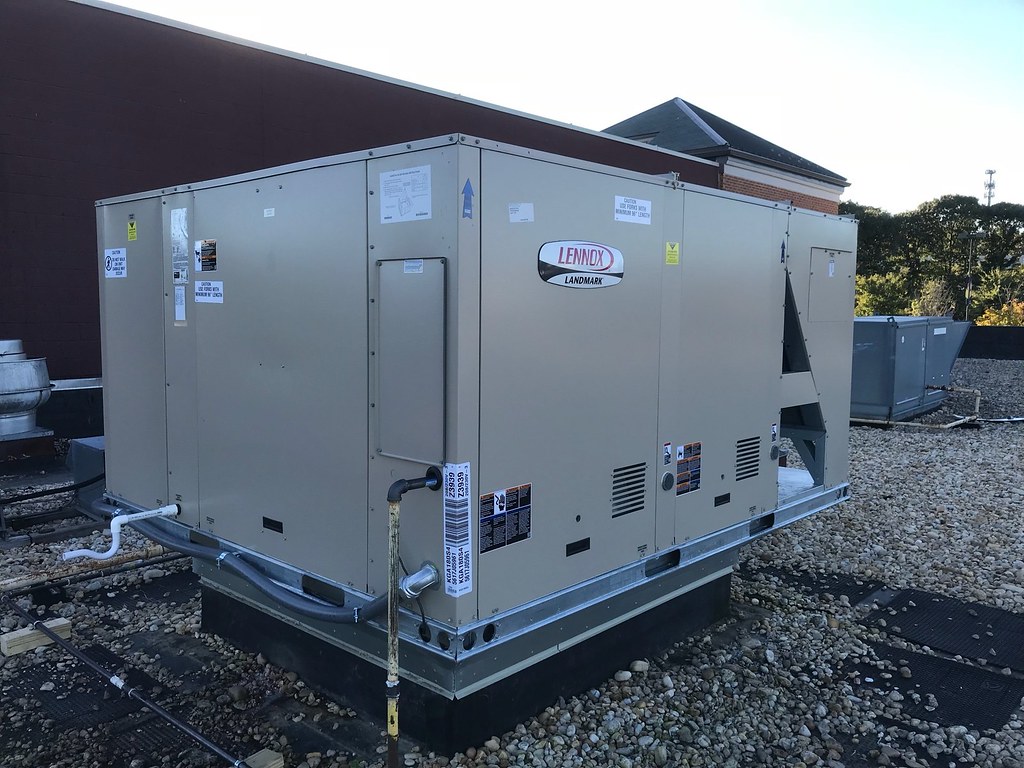
Replacing one rooftop unit is a repair. Replacing fifty of them across a national footprint is a program — and the difference isn't just scale, it's the number of ways a straightforward job can quietly go sideways when nobody is coordinating the whole picture.
Facility managers who've run a large HVAC rollout tend to describe it the same way: the equipment was never the hard part. The hard part was everything around it — scheduling, access, tenant coordination, and the dozens of small decisions that compound across dozens of sites. Here's what a program at that scale actually teaches you.
The sequencing problem nobody plans for
On paper, a rollout is simple: prioritize the oldest or highest-risk units, get quotes, schedule the work, move to the next site. In practice, the sequence gets rewritten constantly by things that have nothing to do with the equipment itself.
A unit flagged as "replace in Q3" fails in June, jumping the queue. A site scheduled for August turns out to be inside a lease renewal negotiation, and the landlord wants the work timed around it. A crane rental booked for six rooftops gets cancelled because one site's roof access requires a different lift entirely. None of this shows up in an equipment age spreadsheet.
The operators who handle this well don't build a fixed sequence — they build a prioritized list with enough flexibility to absorb reshuffling without losing momentum. The ones who struggle treat the original plan as fixed and spend the whole program fighting it.
Access is the real bottleneck, not the equipment
Rooftop HVAC work sounds like it should be straightforward: crane the old unit off, crane the new one on, connect it, done. The actual bottleneck is almost always access — to the roof, to the building, and to the site itself.
- Crane staging needs a footprint on the ground, which means parking lot closures, which means coordinating with tenants and customers who don't care about your equipment schedule.
- Roof access for older buildings sometimes means the load path, the hatch, or the structural rating wasn't designed for modern unit weights — something you want to know before the crane shows up, not during.
- Building hours matter enormously for restaurants and retail. A unit over a kitchen line can't come down during service. A unit over a sales floor can't drop debris during business hours. Every site has its own version of this constraint.
At 50 sites, access logistics — not HVAC engineering — end up driving the calendar more than anything else.
Tenant and manager communication is a full-time job
Every site in a rollout has a local manager whose day gets disrupted, however briefly, by the crew, the crane, and the noise. The programs that go smoothly are the ones where that manager knew about the work a week in advance, knew roughly what hours to expect disruption, and had a number to call if something changed on-site.
The programs that generate complaints are the ones where a crane truck showed up unannounced, blocked the loading dock during a delivery window, or ran a rooftop crew during a lunch rush. None of that is an HVAC failure. It's a communication failure that happens to be attached to an HVAC job.
At scale, this communication has to be systematized — a standard notice template, a standard lead time, a single point of contact per site — because doing it ad hoc for 50 locations means it eventually gets skipped somewhere, and that somewhere is where the complaint comes from.
Vendor bench depth decides your timeline
A single-site HVAC replacement can tolerate a vendor's normal lead time. A 50-site rollout cannot — not if every unit routes through the same three-person crew. Programs that finish on schedule are almost always backed by multiple qualified vendors working in parallel across regions, not one vendor working sequentially across the whole map.
This is also where quality control gets harder to see. When one crew does all fifty units, workmanship is at least consistent, for better or worse. When five regional crews split the work, someone needs to be checking that startup procedures, refrigerant charging, and commissioning documentation look the same everywhere — because "the vendor in Texas does it differently" isn't an acceptable answer when a unit fails eight months later.
Documentation is the difference between a program and a pile of invoices
By unit forty, most managers can't recall which sites got which model, which crew did the work, or what the commissioning report said for a specific location. That's fine — as long as it's written down somewhere searchable. A rollout without a structured close-out record (photos, startup sheets, warranty documents, serial numbers, by site) turns into a liability the moment something needs a warranty claim two years later and nobody can find which unit, at which site, under which invoice, covers it.
The equipment in a large HVAC rollout is rarely the risk. The risk is losing track of the coordination, the access logistics, and the records across dozens of sites running in parallel — and that's a project management problem as much as a mechanical one.
If you're planning a multi-site HVAC program and want it run like the ones that actually finish on schedule, VXO coordinates rooftop replacements, vendor scheduling, and close-out documentation across every market you operate in. Reach out to our team or request service anytime through the VXO client portal.